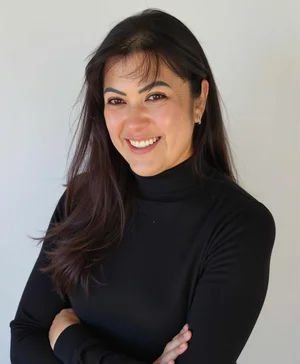
I spent more than a decade as an executive assistant before I was a Chief of Staff or a COO. People tend to see those years as the thing I grew out of. I see them as the foundation. Almost everything I do as a COO, I learned first at an executive's desk.
When I tell my career story, people often skip past the beginning. EA, then Chief of Staff, then COO. The first part gets treated like the waiting room.
It wasn't. It was the training.
I didn't learn operations in a classroom. I learned it by running an executive's world for more than ten years: the calendar, the people, the information, the logistics, and the hundred small decisions in between. Every one of those turned into a COO skill later. I just didn't have the words for it yet.
Seven things the EA seat taught me
1. A calendar is a strategy.
Managing an executive's time is managing their priorities. Every yes on the calendar is a no to something else. Learning to protect the important work from the urgent work is exactly what a COO does for a whole company.
2. How decisions really get made.
From the EA desk you see how your executive actually decides, not how they say they decide. What they need to see first. Who they listen to. What stalls. That's the foundation of decision rights, and most leaders never get to see it that clearly.
3. Seeing problems before they happen.
A good EA lives one step ahead. The flight that might be late, the meeting that needs a backup plan, the document someone will ask for. As a COO, that same habit is called risk management and planning.
4. Being the hub.
EAs know what's happening across the company, because everything passes through them. Connecting the right people with the right information is the core of cross-functional work.
5. Holding trust.
EAs handle the confidential things: people issues, money, changes nobody knows about yet. Earning that trust, and keeping it, is what lets a COO handle the hard conversations later.
6. Getting things done without authority.
An EA can't order anyone to do anything. You get it done through relationships, timing and follow-through. That's influence, and it's the skill that matters most when a COO has to lead people through change.
7. Logistics at scale.
Events, travel, vendors, contracts, budgets. Running all of it without dropping anything is operations, just at a smaller scale. When I later managed contractors, contracts and vendor spend, I was using the same muscles.
Side by side
| What I did as an EA | What it became as a COO | |
|---|---|---|
| Time | Protected the executive's calendar | Set the company's priorities and operating rhythm |
| Decisions | Learned how my executive decides | Defined who decides what across the company |
| Planning | Stayed one step ahead of the day | Planned for risk a quarter ahead |
| Information | Was the hub everything passed through | Connected teams so work moved between them |
| Trust | Kept the confidential things confidential | Led the hard people conversations |
| Influence | Got things done without authority | Led teams through change |
| Logistics | Ran travel, events and vendors | Ran contracts, vendors and budgets |
If you're an EA right now
Your work is operations. Start describing it that way.
You don't "manage a calendar." You manage priorities and time for a leader. You don't "plan events." You run cross-functional projects with budgets, vendors and deadlines. You don't "handle the inbox." You decide what reaches a decision maker and what doesn't.
The skills are the same. The words decide whether people see them. For years, people saw my title before they saw my work. Changing how I described the work was one of the first steps in changing that.
If you're a founder
Look closely at your EA. They may already know more about how your company runs than anyone else on the team.
Ask them what they see. Give them one operational problem to own. You might find that your next operator has been sitting outside your door the whole time.
The foundation
I'm proud of my EA years. They taught me how a business actually runs, one day at a time, from the closest seat in the building.
Being a Chief of Staff and then a COO didn't replace what I learned there. It built on it.
If you're a founder looking for an operator who has run the work from every seat, let's talk.